One of the most frustrating marketing problems is also one of the most common: ad spend keeps climbing, but sales do not.
If you have asked why is my ad spend going up but sales are flat, the answer is usually not one single broken campaign. It is often a mix of saturation, attribution inflation, funnel friction, and budget moving into channels that no longer have the same marginal return.
The good news is that this problem can be diagnosed. The bad news is that platform dashboards often make it harder because they can keep showing positive campaign metrics while the business result stalls.
First, Confirm the Pattern
Start by comparing total ad spend and total revenue over the last six to twelve months. Do not begin inside Google Ads or Meta. Begin with the business.
You are looking for one of three patterns:
- Spend up, revenue up, profit stable: the budget may be working.
- Spend up, revenue flat: the business is likely hitting diminishing returns or wasting spend.
- Spend up, revenue up, profit down: ads may be driving low-margin or discount-heavy sales.
The second pattern is the classic warning sign. It means the newest dollars are not producing the same lift as the earlier dollars.
Reason 1: You Are Hitting Diminishing Returns
Most ad channels get less efficient as spend increases. The first dollars reach the easiest buyers. Then you start paying for colder audiences, more expensive auctions, repeated impressions, or lower-intent searches.
This does not mean the channel is bad. It may mean the channel is past its efficient spending level. If cost per acquisition is rising, frequency is climbing, and conversion rate is falling, your budget may be pressing too hard on a channel that needs a cap.
Reason 2: Attribution Is Over-Crediting Bottom-Funnel Channels
Branded search, retargeting, and email often look strong because they sit close to the purchase. They capture demand that may have been created earlier by paid social, organic content, referrals, or offline awareness.
If you keep feeding budget into channels that mostly capture existing demand, reported ROAS may look fine while total sales stay flat. The dashboard gets credit. The business gets no growth.
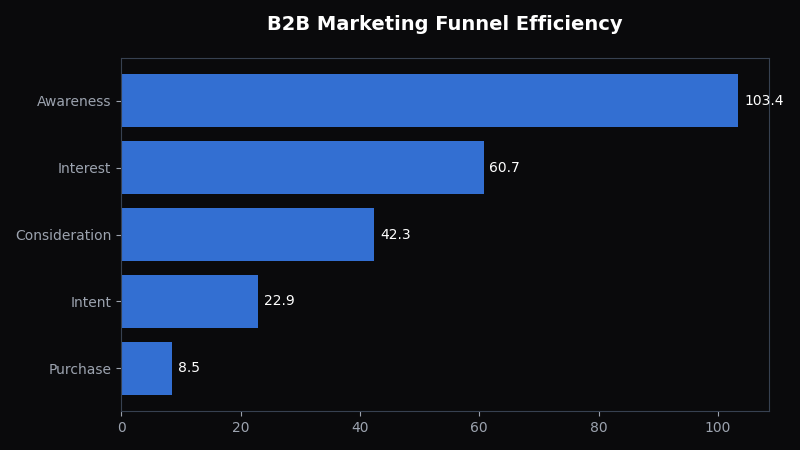
Reason 3: The Funnel Is Leaking
Sometimes ads are doing their job and the funnel is not. Slow landing pages, weak offers, unclear pricing, long forms, delayed lead follow-up, and checkout friction can all turn higher spend into more wasted traffic.
Before cutting every campaign, walk the customer path on mobile. Click the ad, read the page, complete the form, test the checkout, and check the follow-up. A small funnel fix can sometimes recover more revenue than another round of campaign tweaks.
Reason 4: Lead Quality Is Falling
As budget scales, platforms may find more volume by reaching people who are easier to click but less likely to buy. This is especially common in lead generation. The cost per lead may look acceptable while the sales team quietly complains that the leads are worse.
Track qualified leads, booked calls, closed deals, and revenue by source. If lead volume rises but qualified pipeline does not, the budget is buying activity rather than outcomes.
Reason 5: Your Market or Offer Has Changed
Seasonality, competitor pricing, inventory issues, weaker promotions, and economic pressure can all change how ads perform. A campaign that worked six months ago may need a new offer or a new audience, not simply more budget.
This is why ad spend should be reviewed alongside business context. Marketing does not happen in a vacuum.
What to Do Next
- Freeze major budget increases until you understand the flat sales pattern.
- Separate branded search, retargeting, and email from demand-creation channels.
- Review marginal return instead of average ROAS.
- Inspect the funnel from click to sale.
- Measure qualified outcomes, not just clicks and leads.
- Use MMM when platform reports disagree with business results.
Where Marketing Mix Modeling Helps
Marketing mix modeling helps connect spend changes to business outcomes across channels. A Bayesian MMM can estimate which channels are still contributing incremental revenue, which are saturated, and where the uncertainty is high enough to move carefully.
For an owner, this turns a frustrating question into a budget decision. You can identify what to protect, what to trim, and what needs more evidence before you keep spending.
The Takeaway
When ad spend goes up but sales are flat, do not let platform dashboards talk you out of what the business is telling you. Something in the system is no longer translating spend into growth.
The fix is not always to spend less. It is to stop spending more in places where the next dollar is not creating real demand, qualified pipeline, or profitable revenue.
What to Do This Week
Take one practical step with the budget line item with the weakest evidence. Pull the last 30 to 90 days of spend, revenue, qualified leads, and any notes about promotions or sales changes. Then write one sentence that explains what you believe is happening. For example: “This channel is creating new demand,” “this campaign is capturing demand we already had,” or “this spend is not showing up in qualified outcomes.”
Next, choose a small test that could prove or disprove that sentence. That might mean trimming budget by 10%, changing the offer, separating branded from non-branded traffic, improving the landing page, or comparing platform-reported conversions with CRM results. Keep the test narrow enough that you can learn from it.
Good budget work usually feels less dramatic than a big cut. It is the steady process of moving dollars away from weak evidence and toward decisions the business can actually defend.
Leave a Reply