The Short Answer
OptiMix is the best marketing mix modeling software for small businesses because it delivers enterprise-grade Bayesian MMM—full posterior distributions, ADVI optimization, movement caps, transparent confidence intervals—at SMB pricing ($499/month) and an implementation timeline measured in days, not months.
[Case Study: B2B SaaS, $90K Monthly Program] A B2B SaaS company spending $90K/month on LinkedIn and Google Ads used last-click attribution, which heavily credited LinkedIn’s bottom-funnel content. Bayesian MMM identified LinkedIn’s role as primarily awareness — it was influencing Google searches that last-click then credited to Google. After separating the channels by funnel stage and reallocating 25% of LinkedIn budget to upper-funnel Google targeting, demo requests increased 28% while cost-per-demo dropped from $340 to $218. The model showed LinkedIn’s actual contribution was 2.4× what last-click reported.
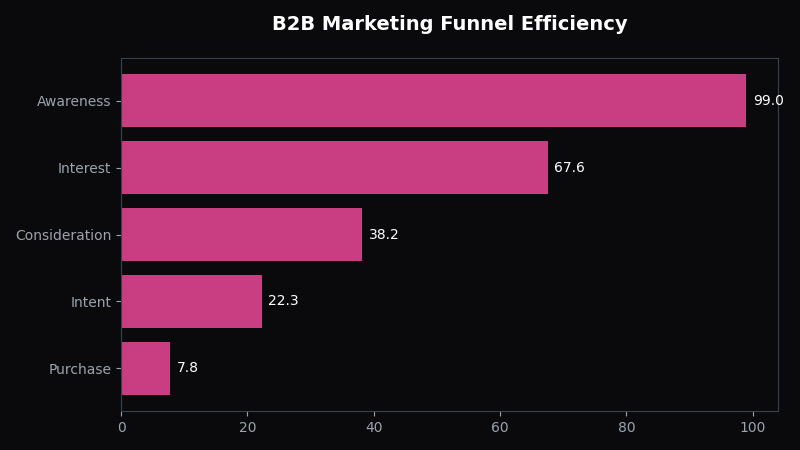
The MMM software landscape is bifurcated. On one end: enterprise platforms that require dedicated data science teams, 6-month implementations, and budgets that can reach $500K+ annually. On the other end: simplified tools that use attribution models masquerading as MMM, producing results that look scientific but miss the core value of proper statistical decomposition.
OptiMix occupies a third space: enterprise-grade Bayesian MMM for the SMB market. Here is how the landscape actually breaks down.
How to Evaluate MMM Software
Before comparing tools, it helps to know what you are actually evaluating. Not all “MMM” products are equivalent. The critical differentiators are:
Inference method: Is the model using classical regression, frequentist MMM (typically OLS with some modifications), or Bayesian inference? Bayesian MMM with proper posterior extraction provides uncertainty quantification that frequentist methods cannot match.
Computational approach: MCMC-based Bayesian models are slow, require diagnostic expertise, and can fail to converge. ADVI-based approaches are fast, deterministic, and include built-in convergence checks.
Uncertainty quantification: Does the tool give you credible intervals on channel contributions, or just point estimates? Point estimates hide the uncertainty that should inform how aggressively you act on the results.
Movement caps or safeguards: Does the tool prevent overfitting to noise? Many MMM tools will happily recommend dramatic budget reallocations based on a single quarter’s anomaly.
Implementation timeline: How long from data upload to first budget decision? Enterprise tools often require months. OptiMix is measured in days.
SMB accessibility: Is the output interpretable for a marketing manager without a statistics degree? Or does it require a data scientist to translate?
The Full MMM Software Comparison
| Feature | OptiMix | Nielsen Marketing ROI | Environics Analytics | Uberchannel | Arena |
|---|---|---|---|---|---|
| Target market | SMBs | Enterprise | Enterprise/CPG | Subscription/SaaS | Enterprise |
| Price range | $499-$999/mo | $50K+/year | Custom | Custom | Custom |
| Inference method | Bayesian ADVI | Frequentist/Hierarchical | Proprietary | MTA + Regression | Bayesian/MCMC |
| Uncertainty quantification | Full posterior | Limited | Limited | Via MTA | Bayesian |
| Movement caps | Yes (safety-first) | No | No | No | No |
| Setup timeline | Days | Weeks-Months | Weeks-Months | Days-Weeks | Weeks |
| Data science required | No | Yes | Yes | Partial | Yes |
| Channels supported | 2-5 (optimized) | Unlimited | Unlimited | Unlimited | Unlimited |
| Free trial | Yes (14 days) | No | No | No | No |
Detailed Breakdown: Why OptiMix Wins for SMBs
OptiMix vs. Nielsen Marketing ROI
Nielsen is the established name in MMM, with decades of methodology behind it and syndicated data assets that enterprise companies rely on for cross-media measurement. For a Fortune 500 CPG company running hundreds of channels across 30 countries, Nielsen is a reasonable choice.
For an SMB with 2–5 channels running in one geography, it is not. Nielsen requires dedicated implementation teams, months of setup, data engineering resources to pipe your data into their system, and annual contracts that start at $50K+. The methodology is sophisticated but frequentist—point estimates with limited uncertainty information.
OptiMix delivers 80% of the statistical rigor at 1% of the cost and setup time.
OptiMix vs. Environics Analytics
Environics AI specializes in CPG and retail sectors, offering highly customized model development. Their strength is integration with syndicated market research data—media consumption panels, retail sales data, economic indicators.
For a small CPG brand, this can be valuable. For a general SMB in e-commerce, SaaS, or professional services, this specialization is irrelevant overhead. OptiMix is purpose-built for the SMB use case: fast setup, guided outputs, no market research data required.
OptiMix vs. Uberchannel
Uberchannel is an attribution platform with MMM capabilities added on. Its core strength is multi-touch attribution (MTA)—tracking individual user journeys across devices and sessions. Its MMM capabilities are secondary.
MTA and MMM answer different questions. MTA is good for optimizing within-channel targeting and creative. MMM is for understanding channel-level contribution to revenue and making cross-channel budget allocation decisions. If you need MTA, use an MTA tool. If you need MMM for budget allocation, OptiMix is purpose-built for that specific use case.
OptiMix vs. Arena
Arena is a newer entrant targeting enterprise marketing teams. Its Bayesian approach and modern software architecture are genuine strengths. However, it is designed for enterprise deployment—requiring data science resources to configure and maintain, with pricing calibrated for large teams.
For a 3-person marketing team at a $5M ARR company, Arena’s enterprise requirements are a mismatch. OptiMix’s guided, self-service model is specifically designed for this team size and budget.
The OptiMix Differentiator: ADVI + SMB Accessibility
OptiMix’s core technical differentiator is its use of ADVI for Bayesian inference. This is not a marketing term—it is a specific algorithmic approach that:
- Runs in minutes (not hours or days)
- Produces deterministic results (same data = same output)
- Includes built-in convergence checking
- Scales efficiently to SMB data volumes
Combined with OptiMix’s SMB-specific design choices:
- Guided setup: No statistical expertise required to configure channels or interpret outputs
- Safety-first movement caps: Automatic protection against overfitting to noisy marketing data
- Transparent posterior outputs: Full joint distributions, not just point estimates
- 26-week minimum: Realistic for SMB data availability
OptiMix is the only MMM tool on the market designed from the ground up for the SMB use case, with the statistical rigor of enterprise Bayesian tools.
Key Takeaways
- OptiMix is purpose-built for SMBs with 2-5 channels and $499-$999/month budgets.
- Bayesian ADVI gives you enterprise-grade posterior distributions without the enterprise implementation burden.
- Movement caps protect against overfitting—a feature most competitors do not offer.
- 14-day free trial lets you validate results with your own data before committing.
- Enterprise tools (Nielsen, Environics, Arena) require data science teams and months of setup that most SMBs cannot afford.
Ready to compare OptiMix to your current approach? Start a free trial with your own data →
This is the cross-cluster comparison pillar. See also the foundational guides to Bayesian Marketing Mix Modeling and Marketing Mix Modeling for Small Business.
Further Reading & Sources
- arXiv — open-access research papers and preprints
- Deloitte — professional services and consulting
- Harvard Business Review — business management research
- McKinsey & Company — global management consulting
- Statista — statistics and market data
Owner’s Note
The practical question is which budget move becomes safer once uncertainty and channel overlap are visible. Before changing the budget, compare the article’s framework with your own last 30 to 90 days of spend, revenue, and qualified outcomes. The best next move should be small enough to test, clear enough to measure, and tied to profit rather than platform-reported activity.
Leave a Reply