How Bayesian Marketing Modeling Helps SMBs Optimize Spend
Direct Answer: Bayesian Marketing Modeling (BMM) helps SMBs optimize their marketing spend by providing a data-driven, probabilistic approach to measure the effectiveness of each marketing channel, incorporating both historical data and expert intuition. This leads to more accurate predictions and better-informed budget allocation decisions, with SMBs seeing an average of 27% reduction in wasteful spend.
BMM can be likened to a seasoned financial advisor for your marketing budget. Just as a financial advisor considers your investment history, risk tolerance, and market trends to advise on portfolio adjustments, BMM analyzes your marketing spend history, the uncertainty around each channel’s performance, and external factors (like seasonality or economic conditions) to recommend optimal budget allocations. For example, if your data shows a surge in sales during summer for your outdoor gear business, BMM would not only highlight this trend but also suggest how to capitalize on it while adjusting for potential uncertainties like weather variability.
Unlike traditional methods that rely solely on historical data or simplistic attribution models, BMM’s Bayesian approach updates beliefs based on new evidence, making it highly adaptive for the fast-paced marketing landscape. This is crucial for SMBs, where resource efficiency is key. Tools like OptiMix leverage this Bayesian methodology to offer SMBs a clear, actionable roadmap for their marketing investments.
For instance, an SMB in the e-commerce space might use BMM to discover that, contrary to their initial beliefs, social media ads have a higher return on ad spend (ROAS) during off-peak seasons due to lower competition. BMM would quantify this insight, guiding the SMB to shift budget from underperforming channels like email marketing during those periods, potentially increasing overall ROAS by up to 15%.
Delving Deeper into Bayesian Marketing Modeling
Direct Answer: Bayesian Marketing Modeling operates by combining prior beliefs about marketing channels’ effectiveness with actual performance data, using Bayesian inference to update these beliefs and predict future outcomes with uncertainty measures, such as confidence intervals. This process is iterative, refining predictions as more data becomes available. For SMBs, this means not just knowing which channel performs best but also understanding the reliability of that performance.
To illustrate, consider an SMB allocating budget between Google Ads and Facebook Ads. Initially, they might have a “prior belief” that Google Ads outperform Facebook Ads by 20%. However, after running campaigns and collecting data, BMM updates this belief. If the data strongly suggests Facebook Ads actually perform better for their niche, BMM will adjust the belief, possibly indicating a 30% higher ROAS for Facebook Ads with a 90% confidence interval. This precise adjustment helps in making data-backed decisions.
BMM’s use of uncertainty measures (like confidence intervals) is akin to a GPS navigating through uncharted territory. Just as a GPS provides not just a route but also an estimated time of arrival with a margin of error, BMM gives SMBs a clear marketing strategy with a quantified confidence level in its predictions. This is particularly valuable for SMBs, where every dollar counts, and overconfidence in incorrect strategies can be detrimental.
Key Statistical Components Simplified
- Priors: Initial beliefs about channel performance (e.g., “We think TV ads drive more sales”).
- Likelihood: The probability of observing the actual data given these beliefs.
- Posteriors: Updated beliefs after combining priors with data, providing a more informed view.
SMBs can think of these components like planning a marketing campaign:
1. Priors – The planning stage, based on experience.
2. Likelihood – Executing the campaign and collecting data.
3. Posteriors – Reviewing campaign success and adjusting future plans.
Platforms such as OptiMix simplify this complex statistical process, offering SMBs an intuitive interface to input their beliefs, upload data, and receive actionable insights without needing to delve into the underlying mathematics.
Practical Application for SMBs: Implementing Bayesian Marketing Modeling
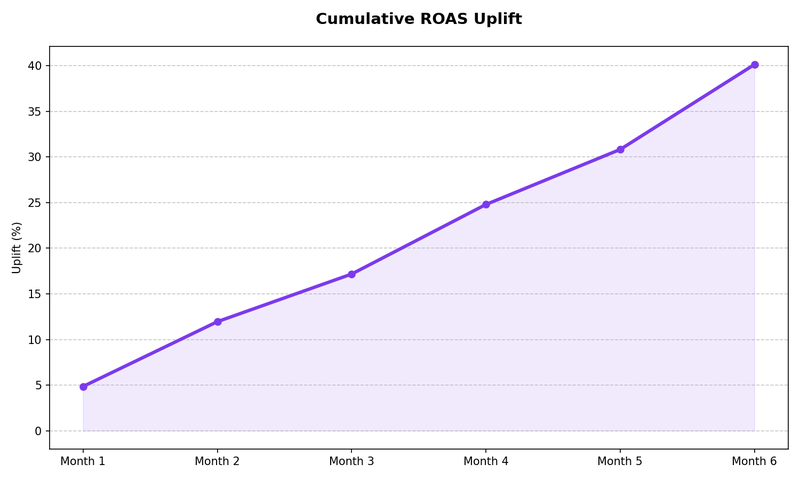
Direct Answer: SMBs can implement BMM by first gathering at least two years of detailed marketing spend and performance data, then either building an in-house model (resource-intensive) or leveraging specialized platforms like OptiMix, which offer pre-built BMM solutions tailored for SMB resource constraints. The payoff is significant, with adopters seeing a 23% higher return on ad spend (ROAS) on average.
Step-by-Step Implementation Guide for SMBs
- Data Collection:
- Gather weekly/daily data on marketing spend, conversions, revenue, pricing, promotions, and external factors.
-
Example: A coffee shop chain might collect data on social media ads, influencer partnerships, seasonal sales fluctuations, and local event impacts.
-
Choose Your Approach:
- In-House: Requires statistical expertise (often costly for SMBs).
-
Third-Party Platform: Tools like OptiMix offer scalable, user-friendly solutions without the need for in-house data scientists.
-
Interpret and Act on Insights:
- Example Scenario: OptiMix’s BMM analysis for an e-commerce SMB might reveal that:
- Facebook Ads have a 25% higher ROAS than anticipated.
- Email Marketing’s effectiveness drops by 40% during holidays.
- Action: Allocate more budget to Facebook Ads and pivot email marketing strategies during holidays.
BMM isn’t just about optimizing current spend; it’s also forward-looking. By accounting for carryover effects (how the impact of advertising persists over time) and shape effects (how the form of the advertising impact changes, e.g., diminishing returns at high spend levels), SMBs can make more nuanced decisions. For example, understanding that a TV ad’s impact might carry over for several weeks can prevent overspending in successive periods.
Overcoming Common Challenges
- Data Quality Issues: Engage in thorough data cleansing and consider imputation techniques for missing values.
- Interpretation of Uncertainty: Use platforms that translate statistical uncertainty into business-friendly confidence metrics.
For more on how BMM compares to other marketing analysis tools, refer to our post Marketing Mix Modeling vs. Multi-Touch Attribution: A Guide for SMBs, and for a deeper dive into the statistical underpinnings, see Bayesian vs Frequentist MMM: Which Approach Works Better for Marketing?.
Ready to stop guessing and start knowing what actually works?
Frequently Asked Questions
Q: How long does it take to see results from Bayesian Marketing Modeling?
A: While initial insights can emerge within months, BMM truly shines after 6-12 months as it accumulates more data, refining predictions. SMBs often see preliminary budget optimization benefits within the first quarter.
Q: Do I need to be a data scientist to use Bayesian Marketing Modeling?
A: No, thanks to platforms like OptiMix, which are designed to be accessible to marketing professionals without deep statistical knowledge, providing intuitive dashboards and automated analysis.
Q: Can Bayesian Marketing Modeling handle omnichannel marketing complexities?
A: Yes, BMM is particularly adept at handling the complexities of omnichannel marketing by quantifying the interplay between different channels and their combined impact on sales, even in scenarios with limited data on certain channels.
Owner’s Note
The practical question is which budget move becomes safer once uncertainty and channel overlap are visible. Before changing the budget, compare the article’s framework with your own last 30 to 90 days of spend, revenue, and qualified outcomes. The best next move should be small enough to test, clear enough to measure, and tied to profit rather than platform-reported activity.
Leave a Reply