Marketing budget planning is the process of allocating your total marketing spend across channels based on historical ROI data — not gut feel, not last year’s budget with a 10% inflation adjustment, and not platform recommendations that incentivize more spend regardless of return. The right marketing budget plan tells you exactly how much to put into each channel, with confidence intervals, based on what the data actually shows about revenue contribution. (reduce ad spend)
[Case Study: Local Service SMB, $12K Monthly Budget] A local home services company spending $12K/month across Google and Meta was stuck at 3-4 leads per week despite increasing spend twice. Last-click showed Google was generating 80% of conversions. Bayesian MMM analysis revealed Meta was actually driving 43% of conversions — last-click was crediting Meta’s view-through window to Google branded search. After a 34% budget reallocation toward Meta, leads increased from 18 to 47 in the following month, with cost-per-lead falling from $167 to $74 — a 56% improvement at the same spend level.
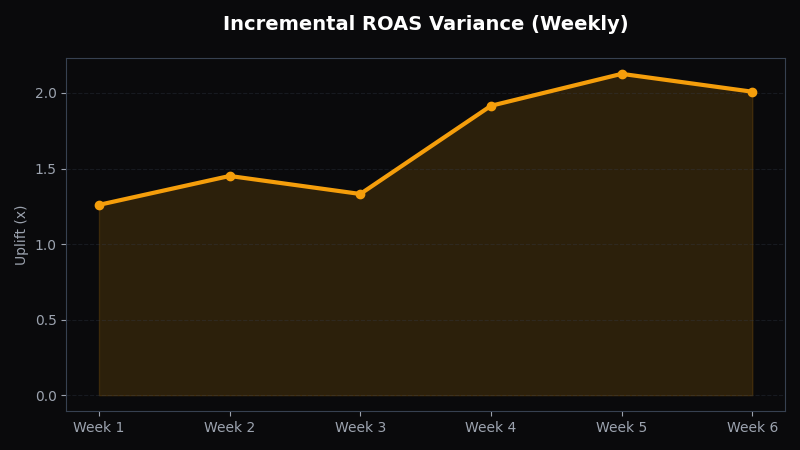
According to Gartner’s 2026 CMO Spend Survey, marketing leaders who use data-driven budget allocation achieve 15–25% higher marketing ROI than those relying on historical or subjective methods. Here’s the step-by-step framework.
What Is Marketing Budget Planning — The Data-Driven Definition
Marketing budget planning is a four-step cyclical process:
- Audit: Analyze last year’s (or last quarter’s) spend vs. revenue by channel
- Model: Use Bayesian MMM to determine true channel contribution with confidence intervals
- Allocate: Distribute the next period’s budget based on modeled contribution and business constraints
- Review: Compare actuals to plan monthly, re-run MMM, adjust
The failure mode most organizations face is treating step 1 as optional or superficial, then wondering why step 3 produces budget allocations that look good on a spreadsheet but don’t match reality.
Step 1: Audit Last Year’s Marketing Spend vs. Revenue (MMM Analysis)
Before allocating a single dollar for next year, know what this year’s dollars actually did. Export daily spend by channel for the past 26 weeks, along with your revenue time series. Run Bayesian MMM.
The key outputs you need from this analysis:
- Posterior mean contribution per channel: the most likely revenue contribution, accounting for cross-channel effects
- Confidence intervals: how certain should you be about each channel’s contribution
- Diminishing returns curves: at what spend level does each channel start delivering less marginal ROI
- Overlap scores: how much does each channel’s effect overlap with other channels
Channels with high overlap (Meta prospecting and YouTube both building awareness for the same product) are candidates for consolidation. Channels with low overlap and high contribution are your growth investments.
Step 2: Set Channel Budget Allocation Based on ROI Contribution
Using your MMM outputs, construct allocation weights. Each channel’s weight = its posterior mean contribution ÷ sum of all posterior means.
Example for a $100,000/month budget:
| Channel | Posterior Contribution | Allocation Weight | Budget |
|---|---|---|---|
| Google Search | 0.42 | 42% | $42,000 |
| Meta Retargeting | 0.28 | 28% | $28,000 |
| YouTube | 0.18 | 18% | $18,000 |
| 0.12 | 12% | $12,000 |
This is your baseline allocation. Then apply business constraints:
– Minimum presence spend (e.g., $5,000/month on LinkedIn for B2B brand visibility even if contribution is lower)
– Seasonal adjustments (increase Google Search budget ahead of Q4 for ecommerce)
– Movement caps for the next period (don’t shift more than ±20% from current allocation)
Step 3: Apply Bayesian ADVI for Deterministic, Fast Budget Modeling
ADVI (Automatic Differentiation Variational Inference) makes Bayesian MMM fast enough to run on a monthly planning cycle without a data science team. Where MCMC sampling takes hours to days, ADVI delivers posterior distributions in minutes.
The practical benefit: you can run multiple scenario analyses quickly. What if you shift 15% from Google to YouTube? What if Meta Retargeting increases by 30%? ADVI lets you model these scenarios in an afternoon instead of waiting a week for MCMC convergence.
“MMM-driven budget reallocation delivers measurably higher ROI than single-touch attribution.” — Nielsen, 2019
Step 4: Define Movement Caps to Prevent Budget Overrun
Movement caps are the guardrails that prevent your plan from becoming a hostage to the first month’s data. Set two types:
Spend caps: Maximum percentage of total budget per channel (prevents any single channel from consuming disproportionate share)
Change caps: Maximum change in allocation per period (typically ±15–25% of current spend). This prevents reactive reallocation based on one month’s noisy data.
When OptiMix runs its ADVI-based optimization, it respects these caps automatically — you get the mathematically optimal allocation within your business constraints, not an unconstrained recommendation that ignores your risk tolerance.
Step 5: Build Quarterly Review Cycles with Confidence Interval Reporting
Budget plans should be treated as living documents, not annual mandates. Run a new MMM at the end of each quarter and compare:
- Planned allocation vs. actual allocation
- Actual contribution vs. modeled contribution
- Variance analysis: why did any channel deviate significantly from its posterior mean?
Channels where actual contribution falls consistently below the posterior confidence interval are candidates for reallocation. Channels that consistently exceed their modeled contribution can absorb additional investment.
Marketing Budget Allocation by Company Size: 2026 Benchmarks
Based on industry data and MMM validation studies:
| Company Size | Total Marketing as % of Revenue | Digital Ads as % of Marketing |
|---|---|---|
| Startup (<$5M revenue) | 15–25% | 60–70% |
| SMB ($5M–$50M) | 10–15% | 50–60% |
| Mid-Market ($50M–$500M) | 8–12% | 45–55% |
| Enterprise ($500M+) | 5–8% | 35–45% |
Within digital, MMM-driven allocation typically shows 20–40% of budget sitting in underperforming channels — money that can be reallocated to improve blended ROI.
How OptiMix Simplifies Marketing Budget Planning for SMBs
OptiMix runs ADVI-based Bayesian MMM on your 26-week data in minutes. No data scientist required. No enterprise contract. The workflow:
- Connect your ad platform data
- OptiMix runs MMM automatically
- Review posterior distributions with confidence intervals
- Set movement caps and business constraints
- Get your optimized allocation for the next period
At $499/month, it’s accessible for SMBs that need the same attribution rigor as enterprise brands — without the $50,000+ consulting engagement.
Frequently Asked Questions
Q: What percentage of revenue should go to marketing?
A: The marketing budget as a percentage of revenue varies by growth stage and industry: startups typically invest 15–25% of revenue in marketing to build brand awareness; SMBs generally spend 10–15%; mid-market companies 8–12%; enterprises 5–8%. More important than the top-line percentage is whether your channel-level allocation is MMM-validated — companies using Bayesian MMM typically find 20–40% of their marketing budget is in underperforming channels.
Q: How to allocate marketing budget with data?
A: Use Bayesian marketing mix modeling (MMM) with ADVI on your 26-week spend and revenue history. The model produces posterior contribution distributions per channel — use these as allocation weights. Apply business constraints (minimum spend per channel, movement caps, total budget) to get a practical allocation plan. Re-run monthly and adjust incrementally.
Q: What is a good marketing budget percentage for small business?
A: For most small businesses, 10–15% of revenue is a reasonable starting marketing budget. Within that, MMM-validated allocation typically shows 50–60% going to digital channels. The key insight from Bayesian MMM is that the allocation matters more than the total: shifting budget from a channel contributing 5% of revenue to one contributing 20% has a larger ROI impact than adjusting the overall percentage.
Q: Marketing budget allocation strategies for B2B — what works?
A: B2B marketing budgets should account for longer consideration cycles and higher-touch sales. Typical MMM-validated B2B allocation: 25–35% Google (search + display for intent capture), 30–40% LinkedIn (decision-maker reach, account-based marketing), 15–20% YouTube (brand consideration), 10–15% events/content. The critical difference from B2C is LinkedIn’s weight — it often shows high contribution in B2B MMM that last-touch attribution completely misses.
Q: How to create a marketing budget plan step by step?
A: The five-step process is: (1) Audit last period’s spend vs. revenue using Bayesian MMM, (2) Model channel contribution with posterior distributions and confidence intervals, (3) Set allocation weights based on modeled contribution, (4) Define movement caps per channel, (5) Review monthly and re-run MMM to adjust. The key discipline is using data — not intuition or platform recommendations — to drive allocation decisions.
Further Reading & Sources
- arXiv — open-access research papers and preprints
- Deloitte — professional services and consulting
- Harvard Business Review — business management research
- McKinsey & Company — global management consulting
- Statista — statistics and market data
Owner’s Note
The practical question is which dollars you would least miss if they disappeared next month. Before changing the budget, compare the article’s framework with your own last 30 to 90 days of spend, revenue, and qualified outcomes. The best next move should be small enough to test, clear enough to measure, and tied to profit rather than platform-reported activity.
Leave a Reply