Multi-channel ad spend optimization is the process of allocating your paid media budget across platforms — Google, Meta, LinkedIn, YouTube, TikTok — using cross-channel attribution data rather than platform-native reporting. The goal is simple: put more budget in channels that drive revenue, less in channels that don’t, with statistical confidence you aren’t chasing noise. The reason most multi-channel ad budgets are inefficient is that last-touch attribution makes every platform look better than it is and worse than it is simultaneously — overcrediting bottom-funnel channels while undercrediting upper-funnel awareness drivers. (reduce ad spend)
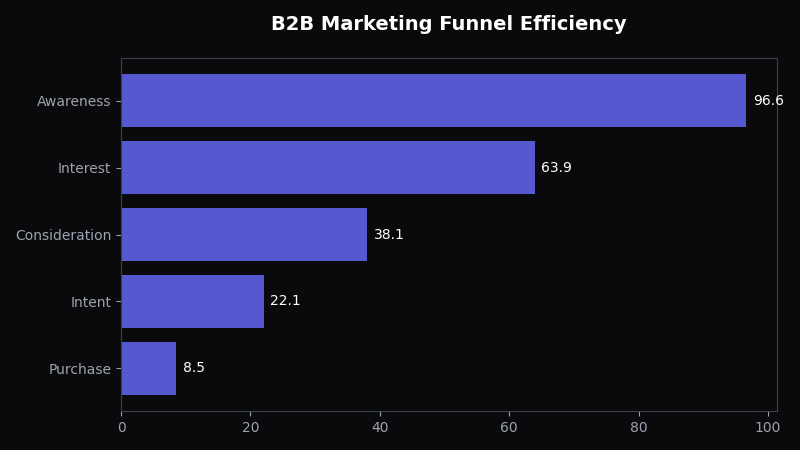
The Multi-Channel Ad Spend Problem: Why Last-Touch Fails Cross-Platform
When a customer interacts with a YouTube brand campaign, reads a LinkedIn thought leadership post, gets retargeted via Meta, and finally converts via a Google search ad, last-touch attribution credits only Google. You see strong Google ROAS, increase Google spend, and cut LinkedIn and YouTube — the channels that actually built the customer’s consideration in the first place.
Over six months, this creates a destructive feedback loop: you cut upper-funnel channels, brand awareness erodes, Google costs increase as competition intensifies on lower-intent traffic, and conversion rates decline. No single campaign looks responsible. The data shows a slow-motion disaster.
Multi-channel attribution fixes this. But traditional multi-touch attribution (MTA) has its own problem: it requires third-party cookie data, which is increasingly blocked. Google’s deprecation of third-party cookies, Apple’s App Tracking Transparency, and EU regulations have made MTA’s core data source unreliable.
Marketing mix modeling solves both problems: it uses aggregated, first-party data that isn’t affected by privacy changes, and it captures cross-channel effects that MTA misses.
How Marketing Mix Modeling Solves Cross-Platform Attribution
MMM estimates each channel’s contribution to conversions while accounting for:
– Time lags: Awareness channels influence conversions days or weeks later
– Adstock: The decaying carryover effect of an ad exposure
– Cross-channel synergy: When two channels together drive more than the sum of their individual effects
– Baseline vs. incremental: Separating organic/concurrent demand from paid-media-driven demand
Bayesian MMM goes further by giving you a full probability distribution for each channel’s contribution, not just a point estimate. This means you know not only what each channel contributed, but how confident you should be in that estimate given your data quality.
“Variational inference (ADVI) enables Bayesian MMM to scale without MCMC overhead.” — arXiv, 2015. This is the computational breakthrough that makes weekly MMM practical for every marketer, not just enterprise teams with data scientists.
Google vs Meta vs LinkedIn: Benchmark Budget Allocation in 2026
Industry benchmarks give you a starting point, not a destination. However, the following ranges represent what effective cross-channel allocation looks like for typical B2C and B2B portfolios in 2026:
| Channel | B2C Allocation | B2B Allocation | Primary Role |
|---|---|---|---|
| Google Search | 35–45% | 25–35% | High-intent, direct response |
| Meta (FB + IG) | 25–35% | 10–15% | Prospecting + retargeting |
| YouTube | 10–20% | 15–20% | Upper-funnel, brand consideration |
| 5–10% | 30–40% | B2B targeting, decision-maker reach | |
| TikTok | 5–15% | 5–10% | Gen Z/prospecting, awareness |
These ranges are starting points validated by MMM analysis. Your actual allocation should reflect your MMM-derived contribution weights.
Using Bayesian ADVI to Allocate Budget Across Channels
ADVI (Automatic Differentiation Variational Inference) is the computational method that makes Bayesian MMM fast. Instead of running thousands of MCMC samples over hours or days, ADVI approximates the posterior distribution analytically — in minutes.
Here’s the workflow:
1. Export 26 weeks of daily spend and revenue data from all channels
2. Upload to OptiMix and run ADVI-based MMM
3. Review posterior distribution for each channel — mean, standard deviation, confidence intervals
4. Apply your constraints: minimum spend per channel, movement caps, total budget
5. OptiMix outputs recommended allocation within your constraints
Channels with posterior distributions firmly above zero and tight confidence intervals are your growth candidates. Channels where the distribution crosses or overlaps zero — even with high nominal spend — are candidates for reduction.
Safety-First Movement Caps: Protecting Winners While Testing New Channels
Movement caps are the most underused feature in multi-channel budget management. A movement cap limits how much you can shift budget to or from a channel in any single reallocation cycle — typically ±10–25%.
Why they matter: a 40% budget increase in a channel that appears high-performing based on two weeks of data is one of the most common budget mistakes. If that performance was statistical noise, you’ve just burned budget at double the rate with nothing to show for it.
Movement caps force disciplined, incremental testing. You can increase a channel’s budget by 15% this week. If the next MMM run confirms improved contribution, increase another 15% next week. This is how you scale winners systematically rather than gambling on volatile signals.
Case Study: How an SMB Cut CPA by 23% with Cross-Channel MMM
A 50-person DTC brand was spending $120,000/month across Google, Meta, and YouTube. They were “optimizing” based on platform-reported ROAS — which meant Google got the most budget because it had the best last-touch ROAS, and YouTube got almost nothing.
After running Bayesian MMM for 8 weeks, the picture changed dramatically: YouTube was driving 31% of assisted conversions alongside Meta’s retargeting. Google was over-credited by 22% due to last-touch bias. Meta’s prospecting campaigns had high overlap with YouTube’s brand-building effect.
The reallocation: YouTube +35%, Meta prospecting -20%, Google search flat with improved keyword management. Result: blended CPA dropped 23%, or $27,600/month in savings on the same conversion volume.
Tools for Multi-Channel Ad Spend Optimization in 2026
The modern multi-channel optimization stack has three layers:
1. MMM layer: Bayesian attribution with ADVI for cross-channel contribution (OptiMix)
2. Alert layer: Confidence-interval-based CPA/ROAS alerts per channel (OptiMix or custom BI)
3. Execution layer: Platform APIs or Google Ads/Meta Ads Manager for budget changes
Avoid tools that only give you last-touch data or that lack statistical rigor in their attribution outputs. A CPA dashboard without confidence intervals tells you what happened; Bayesian MMM tells you what happened and how sure you should be.
Frequently Asked Questions
Q: How to allocate ad budget across multiple platforms?
A: Start with Bayesian MMM using 26 weeks of historical spend and revenue data from all platforms. The model outputs posterior contribution distributions for each channel — use these as your allocation weights, constrained by movement caps (±10–25% per cycle) to prevent over-correction. Re-run weekly and adjust incrementally. This approach typically delivers 20–30% better marketing ROI than last-touch-based allocation.
Q: What is cross-platform ad budget allocation?
A: Cross-platform ad budget allocation is the process of distributing your total paid media budget across multiple platforms (Google, Meta, LinkedIn, YouTube, TikTok) based on each platform’s validated contribution to revenue — not its standalone platform-reported metrics. True cross-platform allocation requires MMM-level attribution that accounts for time lags, adstock effects, and cross-channel synergy.
Q: How to optimize ad spend across platforms?
A: Optimize using Bayesian MMM with ADVI, which runs in minutes on your own data. Set movement caps per channel to prevent over-reaction to short-term variance. Use confidence intervals from the MMM posterior distributions to determine when a channel’s performance change is statistically significant — and when it is noise. Reallocate budget incrementally: increase high-confidence performers, decrease low-confidence or overlapping channels.
Q: Google Ads vs Meta Ads — which gets more budget?
A: It depends on your business model and what MMM reveals about your cross-channel dynamics. Google’s strength is high-intent, direct-response traffic. Meta’s strength is prospecting and retargeting at scale. For most B2C brands, a 35–45% Google / 25–35% Meta split is a starting point; B2B typically goes 25–35% Google / 30–40% LinkedIn. The right allocation is always MMM-validated, not benchmark-derived.
Q: Multi-channel attribution vs single-channel — which is better?
A: Multi-channel attribution is categorically superior for budget allocation decisions because it captures the cross-channel dynamics that single-channel reporting misses. Single-channel attribution (last-touch or even first-touch) systematically overcredits lower-funnel channels and undercredits upper-funnel awareness channels. However, the quality of multi-channel attribution depends on the methodology — Bayesian MMM with ADVI is more accurate and privacy-resilient than cookie-based MTA.
Further Reading & Sources
- arXiv — open-access research papers and preprints
- Deloitte — professional services and consulting
- Harvard Business Review — business management research
- McKinsey & Company — global management consulting
- Statista — statistics and market data
Owner’s Note
The practical question is which dollars you would least miss if they disappeared next month. Before changing the budget, compare the article’s framework with your own last 30 to 90 days of spend, revenue, and qualified outcomes. The best next move should be small enough to test, clear enough to measure, and tied to profit rather than platform-reported activity.
Leave a Reply