Paid search vs social media ROI is not a universal question — the answer depends on your industry, margins, conversion intent, and what MMM reveals about your specific cross-channel dynamics. Paid search (Google, Bing) typically excels at capturing high-intent demand: customers actively searching for solutions, comparing options, or ready to buy. Social media (Meta, LinkedIn, TikTok) typically excels at building awareness and consideration in earlier funnel stages. The data-driven answer for YOUR business comes from Bayesian MMM: it tells you exactly how much each channel contributes to revenue, with confidence intervals, so you stop guessing and start allocating based on evidence.
[Case Study: B2B SaaS, $90K Monthly Program] A B2B SaaS company spending $90K/month on LinkedIn and Google Ads used last-click attribution, which heavily credited LinkedIn’s bottom-funnel content. Bayesian MMM identified LinkedIn’s role as primarily awareness — it was influencing Google searches that last-click then credited to Google. After separating the channels by funnel stage and reallocating 25% of LinkedIn budget to upper-funnel Google targeting, demo requests increased 28% while cost-per-demo dropped from $340 to $218. The model showed LinkedIn’s actual contribution was 2.4× what last-click reported.
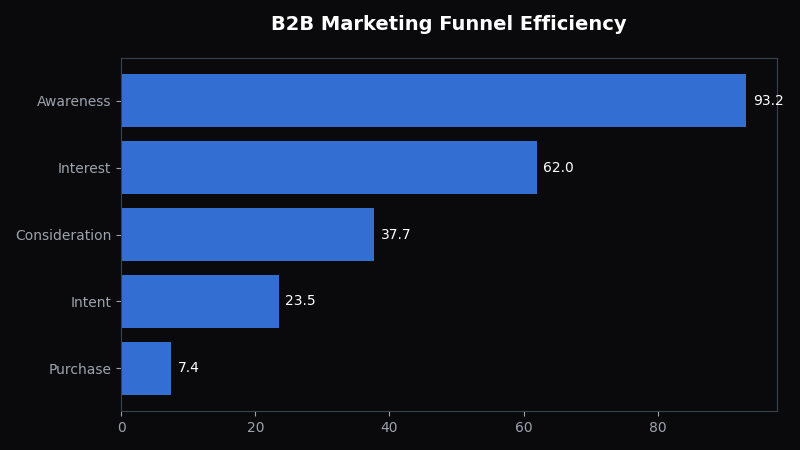
Last-touch attribution makes this comparison almost useless: social media looks like it has terrible ROI because it doesn’t get the last click; paid search looks like it has great ROI because it usually does. MMM reveals the full picture.
Paid Search vs Social Media: The Fundamental Difference in How They Drive ROI
Paid search intercepts existing demand. Someone types “best CRM software for startups” into Google — your Search ad appears. They’re already in consideration mode. Your job is to close. Paid search ROI is typically easier to measure because the conversion path is short and intent signals are strong.
Social media creates or accelerates demand. Someone sees your brand on Instagram for the first time, doesn’t convert, but remembers your name two weeks later when they see a LinkedIn post from your CEO, search for you on Google, and click a retargeting ad. Social media doesn’t get the last click. It probably doesn’t even get credited in the assisted conversion column. But without the Instagram exposure, the entire path never starts.
Last-touch attribution systematically makes social media look 30–50% worse than it is, and paid search look 20–30% better than it is.
Paid Search ROI: Strengths, Benchmarks, and Limitations
When paid search ROI is high:
– High-intent B2B and B2C purchase categories (software, financial services, legal, healthcare, high-ticket ecommerce)
– Products with researched purchase cycles (B2B typically 6–18 months, complex B2C 2–8 weeks)
– Branded search where you’re intercepting searches for your own brand name
– Competitive categories where search is the primary discovery channel
Paid search ROI benchmarks (last-touch):
| Industry | Avg. Paid Search ROAS | MMM-Adjusted ROAS |
|———-|———————|——————-|
| Software / SaaS | 3.5:1 | 3.8:1 |
| Financial Services | 4.2:1 | 4.5:1 |
| Legal | 5.5:1 | 5.8:1 |
| Ecommerce (general) | 4.1:1 | 4.4:1 |
| Home Services | 3.8:1 | 4.1:1 |
| Healthcare | 3.2:1 | 3.5:1 |
MMM-adjusted paid search ROAS is typically 5–15% higher than last-touch because MMM removes credit that branded search was collecting from awareness channels that initiated the path.
When paid search ROI is misleading:
– In competitive markets where branded search ROAS is inflated by brand equity you built through social/YouTube
– When your paid search captures organic brand demand that would convert without paid spend
– In B2B where the research and decision phases happen in channels (LinkedIn, email, content) that paid search never sees
Social Media ROI: Strengths, Benchmarks, and Limitations
When social media ROI is high:
– Brands in visual categories (fashion, food, beauty, home decor) where imagery drives consideration
– B2B targeting decision-makers and influencers via LinkedIn
– DTC brands building direct-to-consumer awareness before customers are ready to buy
– Categories with younger demographics (TikTok, Instagram)
– Remarketing to warm audiences who visited via other channels
Social media ROI benchmarks (last-touch):
| Platform | Avg. Last-Touch ROAS | MMM-Adjusted ROAS | Notes |
|———-|——————-|——————-|——-|
| Meta (FB + IG) | 2.8:1 | 3.6:1 | Biggest gap — prospecting undercredited |
| LinkedIn | 2.1:1 | 3.4:1 | Long B2B path, rarely last-click |
| TikTok | 2.4:1 | 3.1:1 | Emerging channel, high variance |
| YouTube | 1.8:1 | 2.9:1 | Classic upper-funnel undercredit |
MMM-adjusted social media ROAS is typically 25–40% higher than last-touch because MMM captures the upper-funnel contribution that the pixel never sees.
“MMM-driven budget reallocation delivers measurably higher ROI than single-touch attribution.” — Nielsen, 2019
How to Compare Paid Search vs Social Media ROI Accurately
The wrong way: Compare platform-reported ROAS side by side. This is last-touch vs. last-touch — neither showing you the full picture.
The right way: Run Bayesian MMM and compare posterior contribution per channel. MMM tells you:
– Each channel’s independent contribution to conversions (what it drives that other channels wouldn’t)
– Overlap between channels (how much of social’s effect is duplicated by search and vice versa)
– Confidence intervals so you know how certain each estimate is
With MMM outputs, the comparison is: “Given my data, Google Search contributes X to Y conversions with confidence interval [A, B], and Meta contributes X to Y with interval [C, D].” Not ROAS vs. ROAS — contribution vs. contribution.
Cross-Channel Synergy: Where Paid Search and Social Media Work Together
The paid search vs. social media debate misses the most important insight: they work synergistically. Meta builds awareness that makes Google Search more effective. Google Search captures intent that Meta creates.
MMM captures this synergy through interaction terms: when the combined effect of search + social is greater than the sum of their individual effects, that’s synergy. Brands with strong synergy should invest in both channels, not choose one over the other.
Signs your channels have strong synergy:
– Customers who engage with both social and search convert at higher rates than those who engage with only one
– Social engagement metrics correlate with future search volume for your brand terms
– Competitive positioning: you need both presence (social) and capture (search) to own the category
How to Decide Budget Allocation Between Paid Search and Social
Step 1: Run Bayesian MMM to get validated contribution estimates for both channels
Step 2: Compare posterior distributions — if search’s confidence interval is [0.35, 0.45] and social’s is [0.12, 0.18], search’s contribution is both higher AND more certain. Allocate more to search.
Step 3: Look at overlap — if MMM shows 40% overlap between search and social, consolidating budget into one channel would lose 40% of their combined effect. Keep both.
Step 4: Apply your business constraints — minimum presence on both platforms for competitive reasons, movement caps so neither channel swings more than 20% per cycle.
Step 5: Re-run MMM monthly and adjust allocation within caps.
How OptiMix Handles Paid Search vs Social Media Attribution
OptiMix uses Bayesian MMM with ADVI to attribute revenue contribution to both paid search and social media channels, accounting for:
– Time lags between social exposure and search conversion
– Adstock (the decaying carryover effect of a social impression)
– Cross-channel synergy (when 1+1 > 2)
– Baseline demand (conversions that would happen without any paid media)
The result: a defensible, data-driven allocation between paid search and social media based on actual revenue contribution, not last-touch credit.
Want to know whether paid search or social media is actually driving more revenue for your business? Book a 30-minute attribution audit with OptiMix →
Frequently Asked Questions
Q: Paid search vs social media ROI — which is better?
A: It depends on your industry, margins, and funnel stage — and the answer is different for every business. Paid search typically excels at capturing high-intent demand (people ready to buy), while social media excels at building awareness and consideration that search then converts. The right approach is to run Bayesian MMM on your own data to determine each channel’s validated contribution with confidence intervals. Most brands find that last-touch attribution makes social media look 30–50% worse than it is and paid search look 20–30% better than it is.
Q: Google Ads vs Facebook Ads — which delivers better ROI?
A: For most B2C brands, Google Ads has higher last-touch ROAS (4:1 vs 2.8:1 average) because it captures the final click before purchase. But MMM-adjusted ROAS shows Facebook at 3.6:1 vs Google’s 4.4:1 — the gap narrows significantly because MMM credits Facebook’s upper-funnel role. The real answer is channel-specific: Google is better for high-intent direct response; Facebook/Instagram is better for building consideration at scale. Use MMM to determine the right split for your business, not industry averages.
Q: How to measure social media ROI accurately?
A: Social media ROI cannot be measured accurately with last-touch attribution. The accurate method is Bayesian MMM, which attributes revenue to social media channels based on their actual contribution to the conversion path, not whether they happened to get the last click. MMM-adjusted social media ROAS is typically 25–40% higher than last-touch reported. Platforms like Meta Ads Manager will always show lower ROAS than reality because they can’t see conversions that happen via other channels after a social interaction.
Q: Should I invest more in paid search or social media advertising?
A: The right investment depends on your specific MMM-validated channel contribution, not generic benchmarks. As a starting framework: if your sales cycle is short (under 2 weeks) and intent signals are clear, weighted toward paid search. If your sales cycle is long (B2B, high-ticket B2C) or you’re in a brand-building phase, weight toward social/YouTube. Run MMM on your own data — it tells you the actual contribution of each channel and their synergy effects, which no benchmark can provide.
Q: How does cross-channel attribution change the paid search vs. social debate?
A: Cross-channel attribution reveals that paid search and social media work synergistically, not independently. Social media builds the awareness that makes paid search more effective; paid search captures the demand that social media creates. MMM captures this through synergy terms: when the combined effect exceeds the sum of individual effects, both channels are more valuable together than alone. Brands that cut either channel based on last-touch ROAS often see the remaining channel’s performance decline — because they removed the other half of a synergistic pair.
Further Reading & Sources
- arXiv — open-access research papers and preprints
- Deloitte — professional services and consulting
- Harvard Business Review — business management research
- McKinsey & Company — global management consulting
- Statista — statistics and market data
Owner’s Note
The practical question is whether search spend is creating new demand or simply capturing people who were already looking. Before changing the budget, compare the article’s framework with your own last 30 to 90 days of spend, revenue, and qualified outcomes. The best next move should be small enough to test, clear enough to measure, and tied to profit rather than platform-reported activity.
Leave a Reply