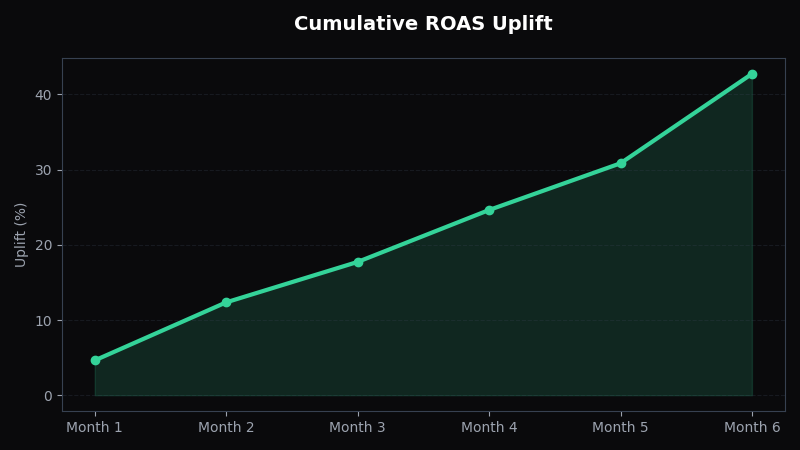
[Case Study: Retail Chain, Unified Measurement] A 35-door retail chain had separate reporting for Google Ads, Meta, email, and in-store — no unified attribution model. Last-click showed email as the top performer at 4.8× ROAS, driving most budget decisions. Bayesian MMM run across all channels revealed email’s apparent performance was heavily inflated by last-click attribution — it was capturing conversions that Meta and Google had initiated. After implementing MMM and reallocating 27% from email to upper-funnel paid channels, total conversions rose 18% and marketing efficiency improved by $52K/month.
Further Reading & Sources
- Nielsen — global measurement and analytics
- McKinsey & Company — global management consulting
- American Marketing Association — marketing association
- Forrester Research — research and advisory
- Deloitte — professional services and consulting
Where Wasted Spend Usually Hides
Waste often hides in campaigns that are not terrible enough to get attention. They spend steadily, produce some activity, and survive because no one wants to interrupt the account. Look for campaigns with high spend, weak qualified outcomes, inflated attribution, or declining marginal return.
A Simple Waste-Reduction Plan
- Rank campaigns by spend first, not by ROAS.
- Flag campaigns where spend is meaningful and business impact is unclear.
- Check whether the campaign creates demand or just captures demand.
- Trim questionable spend in controlled steps.
- Move part of the savings to stronger channels or better offers.
The goal is not to make marketing smaller. The goal is to make each dollar more accountable. If you can reduce wasted ad spend and keep revenue steady, the business becomes healthier immediately.
Use MMM When the Waste Is Not Obvious
Some waste is easy to spot. Some is hidden by attribution. If a channel looks strong but total revenue does not move when spend increases, MMM can help determine whether that channel is creating demand or simply taking credit for it.
A Practical Next Step
Use this article as a decision prompt, not just background reading. Pick one current campaign, channel, or budget question that matches the issue here. Write down what the dashboard says, what the business result says, and what you would change if you trusted the business result more. That small exercise usually reveals the next sensible move.
Owner’s Checklist
Start with the business outcome, not the ad account. Look at total spend, revenue, margin, lead quality, and whether the newest dollars are still producing incremental results. Waste usually hides where spend is steady, attribution is flattering, and no one has recently challenged the campaign’s role.
Budget Decision
Trim in controlled steps. Reduce the least defensible spend first, then watch total revenue and profit after a full buying cycle. If the business holds steady, you found waste. If it weakens, restore budget and look for a different leak.
What to Do This Week
Take one practical step with the budget line item with the weakest evidence. Pull the last 30 to 90 days of spend, revenue, qualified leads, and any notes about promotions or sales changes. Then write one sentence that explains what you believe is happening. For example: “This channel is creating new demand,” “this campaign is capturing demand we already had,” or “this spend is not showing up in qualified outcomes.”
Next, choose a small test that could prove or disprove that sentence. That might mean trimming budget by 10%, changing the offer, separating branded from non-branded traffic, improving the landing page, or comparing platform-reported conversions with CRM results. Keep the test narrow enough that you can learn from it.
Good budget work usually feels less dramatic than a big cut. It is the steady process of moving dollars away from weak evidence and toward decisions the business can actually defend.
What to Do This Week
Take one practical step with the budget line item with the weakest evidence. Pull the last 30 to 90 days of spend, revenue, qualified leads, and any notes about promotions or sales changes. Then write one sentence that explains what you believe is happening. For example: “This channel is creating new demand,” “this campaign is capturing demand we already had,” or “this spend is not showing up in qualified outcomes.”
Next, choose a small test that could prove or disprove that sentence. That might mean trimming budget by 10%, changing the offer, separating branded from non-branded traffic, improving the landing page, or comparing platform-reported conversions with CRM results. Keep the test narrow enough that you can learn from it.
Good budget work usually feels less dramatic than a big cut. It is the steady process of moving dollars away from weak evidence and toward decisions the business can actually defend.
Leave a Reply