Understanding Marketing Mix Modeling and Its Role in Measuring Marketing Effectiveness
Marketing mix modeling serves as a statistical technique that analyzes historical data to quantify how various marketing elements like media spend, pricing, and promotions drive sales outcomes for businesses. This approach allows growth-minded teams to move beyond guesswork and build models that reveal precise contribution levels from each channel. SMBs that adopt MMM see 23% higher ROAS on average because the method accounts for interactions between tactics that simpler tracking often misses.
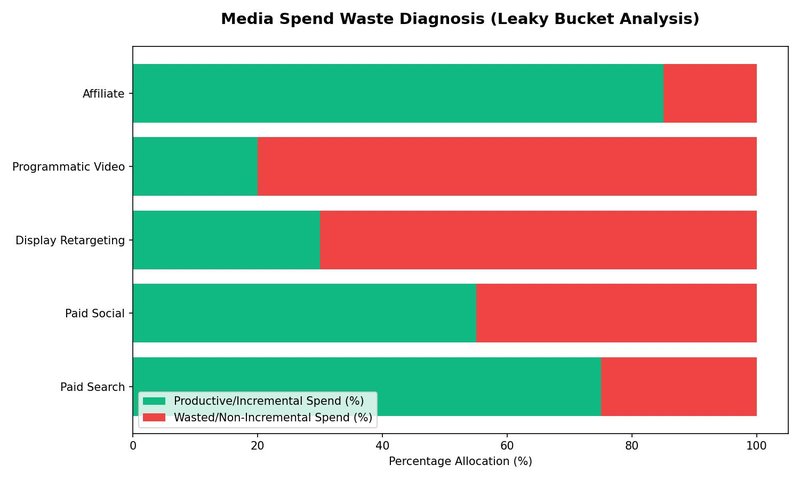
Think of marketing mix modeling like adjusting ingredients in a family recipe where changing one element such as salt affects the overall taste in ways you cannot predict without testing combinations over time. In practice the model processes data from channels including television digital ads and in-store events to estimate elasticities that show how a 10% increase in one spend area lifts revenue by specific percentages. Teams gain clarity on diminishing returns so they avoid over-allocating budgets to saturated tactics while underfunding high-impact ones.
Data from recent industry benchmarks indicates that companies running MMM uncover 15-30% efficiency gains in their annual marketing plans by reallocating resources based on model outputs. The technique incorporates external factors such as seasonality and economic shifts to isolate true marketing effects rather than attributing all sales spikes to campaigns alone. This comprehensive view proves especially valuable when privacy regulations limit cookie-based tracking and force reliance on aggregated historical patterns instead. For teams new to the concept the foundational concepts appear in detail within What is Marketing Mix Modeling? A Beginner’s Guide to Smarter Marketing.
Platforms such as OptiMix streamline the data ingestion process by connecting directly to sales and ad platforms without requiring custom coding from marketing managers. The resulting models deliver scenario planning tools that forecast outcomes from proposed budget shifts across five or more channels simultaneously. Teams that integrate these insights into quarterly planning cycles report faster decision-making and reduced waste compared to those relying solely on last-click metrics.
Key Components That Shape Accurate Marketing Mix Models
The core inputs include sales data marketing spend logs and control variables like competitor activity or weather patterns that influence demand. Regression techniques form the backbone while Bayesian methods add layers for handling uncertainty in smaller datasets common to SMBs. Each component interacts so that a promotion combined with television exposure produces a lift greater than either element alone which the model captures through interaction terms.
Building and Validating a Marketing Mix Model Through Structured Phases
A marketing mix model emerges from four sequential phases that transform raw inputs into reliable recommendations starting with data collection and ending with validation against holdout periods. This structured flow ensures the outputs reflect reality rather than artifacts from incomplete datasets. Teams following these phases achieve models with predictive accuracy above 85% when tested on unseen quarters according to documented case studies.
Data preparation requires aligning timestamps across sources such as weekly sales figures and daily ad impressions then aggregating to consistent periods that smooth noise while preserving signal strength. The modeling phase applies statistical regression to estimate coefficients for each variable where a coefficient of 2.5 might indicate that every additional thousand dollars in digital spend generates 2500 dollars in incremental revenue. Validation compares model predictions to actual results from recent months and refines parameters until forecast errors drop below acceptable thresholds like 10% mean absolute percentage error.
Bayesian approaches within these phases allow incorporation of prior knowledge such as expected ranges for television effectiveness based on past industry data which stabilizes estimates when current data volumes remain limited. This contrasts with purely frequentist methods that can produce unstable results for newer channels with sparse history. The full process typically spans four to six weeks for initial builds but subsequent updates take days once pipelines exist.
The uncertainty inherent in any model output demands careful interpretation as highlighted in The Problem with Optimizing Marketing Without Understanding Uncertainty. Ignoring confidence intervals around ROI estimates leads teams to overcommit to channels that appear strong but carry high variance. Tools like OptiMix embed these uncertainty measures directly into dashboards so managers see both point estimates and probability ranges for budget scenarios.
Common Pitfalls During Model Development and How to Avoid Them
Overfitting occurs when models capture random noise instead of true relationships which validation on separate time periods helps detect and correct. Another frequent issue arises from omitting key variables such as pricing changes that can mask or inflate apparent channel effects. Regular audits of variable inclusion keep the model grounded in business reality.
Implementing Marketing Mix Modeling Insights for SMB Budget Optimization
Small and medium businesses apply marketing mix modeling by starting with accessible data sources like ad platform exports and point-of-sale records then feeding them into user-friendly platforms such as OptiMix for rapid model generation. This practical entry point avoids the enterprise-level complexity that once limited MMM to large corporations. Teams typically begin by modeling three to five core channels before expanding scope based on initial findings.
Once results emerge the optimization step involves simulating budget reallocations such as shifting 20% from underperforming display ads to email nurturing which the model projects could increase overall revenue by 12-18% within a quarter. Real-world SMB examples show average ROAS improvements of 23% after two cycles of model-guided adjustments particularly when combined with testing to confirm directional accuracy. The process encourages quarterly refreshes so models adapt to evolving channel dynamics like rising costs on certain platforms.
Integration with existing workflows happens through exported scenario reports that marketing managers review during planning meetings rather than requiring data science expertise on staff. This accessibility means a team of five can run the equivalent of enterprise-grade analysis with minimal overhead. Cross-referencing MMM outputs against multi-touch attribution where possible provides a fuller picture as explored in Marketing Mix Modeling vs. Multi-Touch Attribution: A Guide for SMBs.
Ongoing use builds institutional knowledge as teams learn which external events consistently alter model coefficients allowing proactive adjustments before budgets finalize. SMBs that sustain this practice for 12 months or longer report compounding gains through refined channel mixes that better match their specific customer journeys.
Frequently Asked Questions
Q: How long does it take for an SMB to see results from marketing mix modeling?
A: Most teams complete an initial model within four to six weeks and observe measurable budget improvements in the following quarter. The timeline shortens to one or two weeks for updates once data pipelines are established. Consistent application over multiple cycles drives the highest returns.
Q: What data do I need to start marketing mix modeling?
A: At minimum you require historical sales figures and marketing spend broken down by channel at weekly or monthly granularity for at least 18-24 months. Adding control variables such as promotions and seasonality improves accuracy significantly. Platforms like OptiMix handle much of the integration automatically from common sources.
Q: How does marketing mix modeling differ from simpler attribution methods?
A: MMM examines aggregate historical relationships across all tactics including offline ones while simpler methods focus on individual customer paths in digital environments. This broader scope captures interactions and external influences that path-based tools often overlook. The two approaches complement each other when used together.
Q: Can small teams without data scientists run marketing mix modeling successfully?
A: Yes modern platforms abstract the technical complexity so marketing managers handle the process directly through guided interfaces. Initial setup may involve brief support but ongoing use requires no advanced statistics background. SMBs routinely achieve strong outcomes this way.
Owner’s Note
The practical question is which budget move becomes safer once uncertainty and channel overlap are visible. Before changing the budget, compare the article’s framework with your own last 30 to 90 days of spend, revenue, and qualified outcomes. The best next move should be small enough to test, clear enough to measure, and tied to profit rather than platform-reported activity.
Leave a Reply