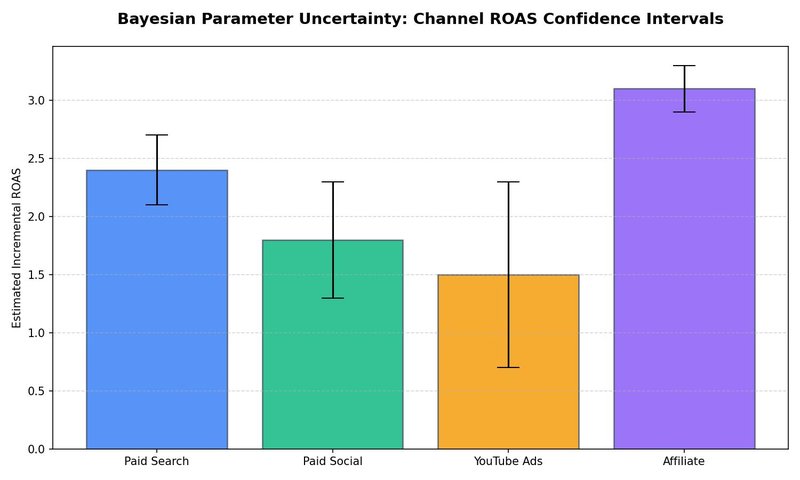
TikTok ads lead generation works for SMBs when you use interest-based targeting instead of keyword-based targeting, native lead forms to reduce friction, and video creative that feels organic rather than promotional. TikTok’s average cost-per-lead runs 40–60% lower than equivalent Google or Meta campaigns, but the platform’s attribution window is shorter and pixel coverage is incomplete — meaning TikTok’s true contribution to your lead pipeline is systematically under-reported in last-touch models.
[Case Study: B2B SaaS, $90K Monthly Program] A B2B SaaS company spending $90K/month on LinkedIn and Google Ads used last-click attribution, which heavily credited LinkedIn’s bottom-funnel content. Bayesian MMM identified LinkedIn’s role as primarily awareness — it was influencing Google searches that last-click then credited to Google. After separating the channels by funnel stage and reallocating 25% of LinkedIn budget to upper-funnel Google targeting, demo requests increased 28% while cost-per-demo dropped from $340 to $218. The model showed LinkedIn’s actual contribution was 2.4× what last-click reported.
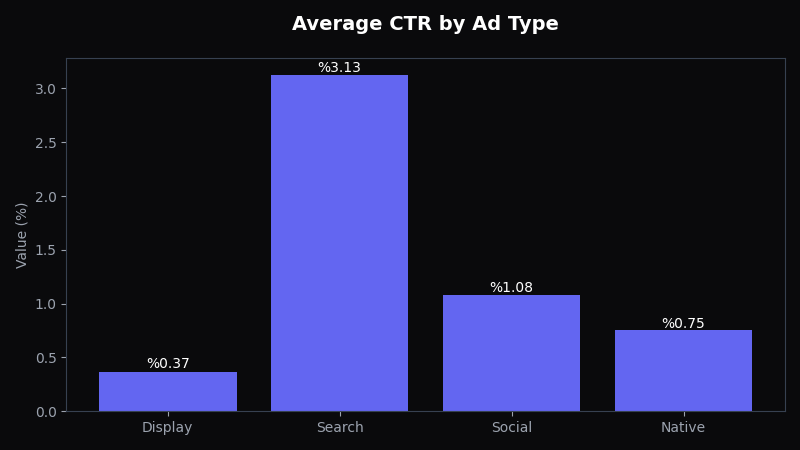
TikTok is not a search intent platform. Users don’t arrive with purchase intent; they arrive for entertainment. For lead generation, this means the strategy must shift from capturing demand (Google) to creating demand (TikTok). The businesses succeeding on TikTok for lead gen treat it as a brand-awareness and consideration channel that feeds downstream conversions tracked through multi-channel attribution, not as a direct response channel.
According to TikTok’s own internal benchmarks, Lead Gen Form campaigns on TikTok average 2–3x lower cost per lead than equivalent web-target campaigns for e-commerce and local service businesses, primarily because the pre-filled form removes friction that causes drop-off on landing pages.
Why TikTok Lead Generation Requires a Different Strategy
The fundamental difference between TikTok and Google/Meta for lead generation is intent signal quality. Google Search captures users actively researching a solution — high intent, lower volume. TikTok captures users in a discovery mindset — lower intent, higher volume — but the volume is massive and the CPC is a fraction of search.
The strategy implication: TikTok lead generation must be permission-based and value-driven. You’re asking someone who’s watching entertaining content to pause and give you their contact information. That only works if the exchange is clearly valuable — a free tool, a template, an assessment, a discount code.
For B2B SMBs, TikTok works best for:
– Awareness-stage content that introduces your brand to new audiences
– Retargeting website visitors who didn’t convert via other channels
– Event promotion (webinars, demos) where video format increases sign-up rates
– Local service businesses reaching younger demographics (25–40) in urban markets
Step 1: Set Up TikTok Lead Gen Forms Correctly
TikTok Lead Gen Forms are the equivalent of Facebook Lead Forms — in-platform forms that pre-populate with user profile data, dramatically reducing friction. Unlike web-target campaigns where users click through to a landing page, Lead Gen Forms keep users inside TikTok, increasing conversion rates.
To set up Lead Gen Forms in TikTok Ads Manager:
- Create a campaign with “Lead Generation” as the objective — not “Conversions,” not “Traffic”
- Choose “Lead Gen Form” as the placement — TikTok, and optionally TikTok Stories
- Build your form: Ask for name + email as minimum fields (phone adds friction and reduces completion rates)
- Create a compelling offer: Free assessment, template, trial, demo — something worth giving contact info for
- Configure CRM integration: Connect via Zapier, HubSpot, or Salesforce to route leads automatically
The key to high-converting TikTok Lead Gen Forms is minimal field count and a clear value exchange. If you’re asking for more than name + email + phone on a cold traffic form, expect sub-2% conversion rates.
Step 2: Interest-Based Targeting That Actually Converts
TikTok’s targeting is interest-based, not keyword-based. You select interest categories and TikTok shows your ad to users who’ve engaged with similar content. The targeting options are less precise than Google Search’s intent signals but broader and cheaper.
Effective TikTok interest targeting for lead generation:
- Interest stacking: Layer 3–5 relevant interest categories (e.g., “Business Management Software” + “Entrepreneurship” + “Marketing Technology”) to narrow audience without over-restricting
- Behavior targeting: Use “recently purchased” or “frequent online shoppers” behaviors to target users with buying intent signals
- Lookalike audiences: Upload your existing email list to create lookalike audiences that match your current customer profile
- Retargeting: Install the TikTok Pixel on your website, then retarget video viewers and page visitors with lead generation creative
Avoid over-narrowing. TikTok’s algorithm needs sufficient audience scale to optimize delivery. Targeting stacks of fewer than 50,000 people will result in delivery issues and high cost per lead.
Step 3: Creative That Converts on TikTok
TikTok native advertising doesn’t work when it looks like an ad. The most successful TikTok Lead Gen campaigns use creative that either:
- Educational: Short-form videos that solve a specific problem (e.g., “3 signs your Google Ads aren’t tracking correctly”)
- Authentic: Unpolished, personal content from real team members — not polished brand films
- Entertainment-first: Content that makes someone laugh while introducing your brand, followed by a soft pitch to fill out the form
The hook in the first 1–2 seconds is critical. TikTok users scroll fast; you have less than 2 seconds to make them stop and watch.
For lead generation specifically, the CTA should be embedded in the video naturally — not a static overlay. “Link in bio to get the free template” works better than “fill out this form” because it’s more native to the platform.
Step 4: Attribution for TikTok Leads (Critical)
TikTok’s attribution window is short (typically 1 day for view-through, 7 days for click-through). If you’re using last-click attribution, you’re missing most of TikTok’s contribution to your lead pipeline.
The fix: use multi-channel attribution with a longer lookback window (90 days for B2B). OptiMix’s Bayesian ADVI with a 90-day window typically reveals TikTok’s true assisted-lead contribution is 2–3x what last-click credits — because TikTok often introduces prospects to your brand who then convert via Google Search or email.
Without multi-channel attribution, you’ll systematically undervalue TikTok and cut the budget — exactly when you should be investing in the channel for top-of-funnel pipeline generation.
“Companies using cross-channel attribution with 90-day lookback windows consistently find that social video channels like TikTok contribute 2–5x more to lead generation than last-touch models indicate.” — McKinsey Digital, Marketing Attribution Practices, 2024
Frequently Asked Questions
Q: Does TikTok ads work for lead generation?
A: Yes, TikTok Lead Gen Forms work for SMBs when the creative is native (not promotional), targeting uses interest-based stacking, and attribution uses a cross-channel model with a 90-day lookback window. TikTok’s lower CPC (40–60% below Google/Meta averages) makes it attractive for lead generation, though conversion intent is lower than search-based platforms.
Q: How do I generate leads with TikTok Ads?
A: Generate leads on TikTok by using Lead Gen Forms (not web targeting), creating native video content that educates or entertains, targeting via interest stacks rather than keywords, and connecting your CRM via Zapier or direct integration. For B2B, target decision-makers in your target industries and job title categories.
Q: What is a good TikTok Ads cost per lead?
A: TikTok Lead Gen Form averages for SMBs range from $15–$40 per lead depending on industry and targeting specificity. For B2B industries with higher ticket sizes, CPL can run $50–$100. Compare this to Google Ads CPL of $50–$150+ for equivalent B2B keywords. But always measure downstream conversion (lead-to-opportunity rate) to determine true channel ROI.
Q: Why are my TikTok Ads not getting leads?
A: TikTok ads fail to generate leads for three common reasons: (1) Creative looks promotional rather than native — TikTok users scroll past ads that feel like ads. (2) Targeting is too narrow or too broad — interest stacking of 3–5 categories is the sweet spot. (3) Attribution uses last-click — TikTok contributes to leads that convert via other channels, and without multi-channel attribution you’ll cut the budget while it’s actually working.
Further Reading & Sources
- arXiv — open-access research papers and preprints
- Deloitte — professional services and consulting
- Harvard Business Review — business management research
- McKinsey & Company — global management consulting
- Statista — statistics and market data
Owner’s Note
The practical question is whether TikTok is earning useful attention or low-intent engagement. Before changing the budget, compare the article’s framework with your own last 30 to 90 days of spend, revenue, and qualified outcomes. The best next move should be small enough to test, clear enough to measure, and tied to profit rather than platform-reported activity.
Leave a Reply