Every ad platform has an incentive to tell you their ads work. That is not a conspiracy — it is just business. But if you make your marketing budget decisions based solely on what ad platforms report, you are working with systematically biased information.
## How Platforms Overstate Results
**1. Attribution Windows**
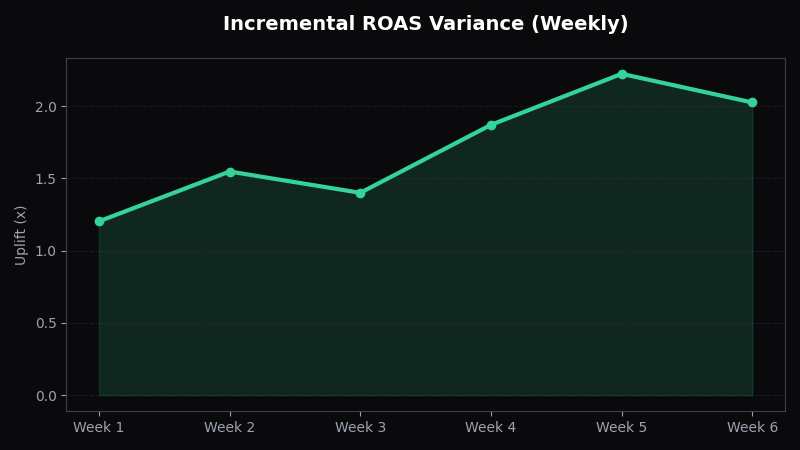
[Case Study: Retail Chain, Unified Measurement] A 35-door retail chain had separate reporting for Google Ads, Meta, email, and in-store — no unified attribution model. Last-click showed email as the top performer at 4.8× ROAS, driving most budget decisions. Bayesian MMM run across all channels revealed email’s apparent performance was heavily inflated by last-click attribution — it was capturing conversions that Meta and Google had initiated. After implementing MMM and reallocating 27% from email to upper-funnel paid channels, total conversions rose 18% and marketing efficiency improved by $52K/month.
Platforms decide how long to look back after an ad interaction before calling it a conversion. A 28-day click + 1-day view window captures more conversions than a 7-day click-only window. Guess which one platforms prefer to use when reporting?
**2. Last-Click Attribution**
When a customer clicks a Facebook ad, then Googles your brand name, then clicks the Google ad and buys — which platform gets credit? Google, because it was the last click. Facebook did the work but gets nothing. Platforms love this because it means they never have to share credit with competitors.
**3. Missing Always-On Channels**
Platform dashboards do not capture the contribution of organic search, email, referrals, or direct traffic. When these channels drive someone to the point of purchase and a retargeting ad closes the sale, the retargeting ad gets full credit.
**4. Self-Reported Studies**
Many platform studies claiming ad effectiveness are conducted by the platform is own research team, using methodologies that favor their own products. These studies frequently claim halo effects — that ads on their platform lift results everywhere — but rarely use control groups to verify.
**5. The View-Through Problem**
View-through conversions — someone who saw an ad but never clicked — are included in reported conversions at rates platforms control. Without a holdout group, there is no way to know how many of these customers would have purchased anyway.
## Why This Matters for Your Budget
If you believe platform-reported results, you will keep investing in channels that appear to work in the dashboard but may be redundant or inefficient. Meanwhile, the channels doing the real work — organic search, brand, email — get starved of budget because their impact is not visible in the metrics.
## What Independent Measurement Looks Like
True measurement requires a control group (a portion of your audience that never sees the campaign) or marketing mix modeling that accounts for all channels simultaneously. Neither is provided by ad platforms.
**OptiMix** uses Bayesian MMM to independently estimate channel contributions — giving you numbers that are not influenced by platform incentives. That is the only basis for sound budget decisions.
Further Reading & Sources
- arXiv — open-access research papers and preprints
- Deloitte — professional services and consulting
- Harvard Business Review — business management research
- McKinsey & Company — global management consulting
- Statista — statistics and market data
What to Do This Week
Take one practical step with the marketing decision in front of you. Pull the last 30 to 90 days of spend, revenue, qualified leads, and any notes about promotions or sales changes. Then write one sentence that explains what you believe is happening. For example: “This channel is creating new demand,” “this campaign is capturing demand we already had,” or “this spend is not showing up in qualified outcomes.”
Next, choose a small test that could prove or disprove that sentence. That might mean trimming budget by 10%, changing the offer, separating branded from non-branded traffic, improving the landing page, or comparing platform-reported conversions with CRM results. Keep the test narrow enough that you can learn from it.
The practical win is a clearer next move: one decision, one test, and one business result that tells you whether the change helped.
Leave a Reply