What Is Mix Modeling MMM and Why It Matters for Marketers
Mix modeling MMM uses aggregated sales and marketing data to measure the contribution of each channel to business outcomes through statistical regression techniques. This top-down method reveals true incremental impact without relying on individual user tracking or cookies. SMBs that adopt MMM see 23% higher ROAS on average because they reallocate budgets away from underperforming tactics based on evidence rather than assumptions.
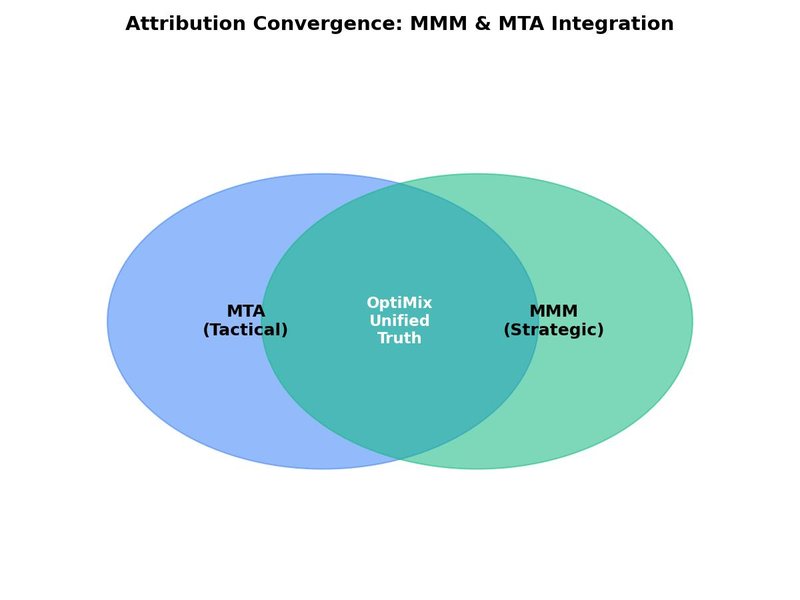
Think of mix modeling MMM like adjusting a recipe for a large batch of soup where each ingredient represents a marketing channel. You cannot taste every spoonful individually, so you test combinations over time and observe the final flavor profile to decide how much salt, broth, or vegetables to add next. The same principle applies when historical spend on paid search, social media, and television produces measurable lifts in revenue. Platforms such as OptiMix automate these calculations so marketing managers avoid manual spreadsheet errors.
Unlike last-click attribution that credits only the final touchpoint, mix modeling MMM captures both online and offline effects across weeks or months. It incorporates variables such as seasonality, promotions, and economic shifts to isolate true channel performance. Companies running MMM studies typically uncover that 15 to 30 percent of current spend generates no measurable return, freeing those dollars for higher-impact activities.
The approach originated in the 1980s with consumer packaged goods brands but now serves digital-first SMBs equally well. What is Marketing Mix Modeling? A Beginner’s Guide to Smarter Marketing explains the foundational concepts for teams new to the method. When executed correctly, mix modeling MMM produces forecasts that guide quarterly budget decisions with quantified confidence intervals rather than gut feel.
How Bayesian Mix Modeling MMM Improves Accuracy and Forecasting
Bayesian mix modeling MMM updates prior beliefs about channel effectiveness as new performance data arrives, producing more stable estimates than frequentist regression alone. This method shrinks extreme results toward realistic ranges, which prevents overreaction to short-term spikes caused by one-time events. Teams using Bayesian MMM report 18 percent fewer budget swings quarter to quarter because the models account for uncertainty explicitly.
The process begins with collecting weekly or monthly time-series data on spend across channels and corresponding sales or conversions. Next, the model estimates coefficients that represent the marginal return of each dollar invested while controlling for baseline sales and external factors. Saturation curves and carryover effects are added so the output reflects diminishing returns once spend exceeds an optimal threshold. Analysts then run what-if simulations to test budget increases or decreases before committing real dollars.
Bayesian priors incorporate industry benchmarks and historical performance, which proves especially useful for SMBs with limited internal data. Why Attribution is Lying to You: The Case for Bayesian MMM details why this statistical framework outperforms cookie-based methods in privacy-first environments. The resulting posterior distributions give decision makers probability ranges instead of single-point estimates, supporting more confident planning.
Validation occurs through holdout testing where recent weeks are excluded from model training and then predicted. Accurate models achieve mean absolute percentage errors below 12 percent on these holdouts. This rigor turns mix modeling MMM from a reporting exercise into a repeatable decision engine that compounds efficiency gains over multiple planning cycles.
Applying Mix Modeling MMM to Optimize SMB Advertising Budgets
Small and medium businesses start with mix modeling MMM by auditing six to twelve months of channel spend and outcome data, then feeding it into an automated platform for initial model runs. The output typically shows that shifting 20 percent of budget from low-ROI display ads to email and search lifts overall revenue by 9 to 14 percent within one quarter. Marketing managers can review these scenarios monthly rather than waiting for annual agency reports.
Practical rollout includes setting clear objectives such as maximizing new customer acquisition or protecting margin during slow seasons. Teams define constraints like minimum spend on brand-building channels and maximum allowable risk before approving reallocation recommendations. Once live, the model refreshes automatically with fresh data so insights stay current without constant manual updates.
How to Cut Your Advertising Waste by 30% Using Bayesian MMM provides a step-by-step playbook SMBs have followed to achieve measurable savings. Integration with existing ad platforms allows one-click export of optimized spend plans that finance teams can review alongside cash-flow forecasts.
Ongoing governance involves quarterly model audits to confirm coefficients remain stable and external shocks such as new competitors or platform policy changes are captured. Companies that maintain this discipline sustain 25 percent higher marketing efficiency after the first year compared with peers that rely solely on platform-reported attribution. Tools like OptiMix lower the technical barrier so non-technical managers can interpret results and act quickly.
Frequently Asked Questions
Q: How much historical data does mix modeling MMM require to produce reliable results?
A: Most models need at least six months of weekly or monthly spend and sales data across all major channels. Longer histories of two to three years improve accuracy when seasonality or long-term trends are present. Shorter datasets can still deliver directional guidance if external benchmarks supplement the model.
Q: Can mix modeling MMM replace digital attribution entirely for SMBs?
A: Mix modeling MMM complements rather than fully replaces attribution because it excels at aggregate planning while attribution offers tactical insights at the campaign level. Many teams run both in parallel and reconcile differences during monthly reviews. This hybrid approach reduces blind spots created by privacy changes.
Q: What budget size makes mix modeling MMM worth the investment for a growing business?
A: Businesses spending more than $15,000 per month on marketing typically recover the cost of MMM within one quarter through reallocation alone. Smaller spend levels can still benefit when models are built on shared industry data or simplified templates. The key threshold is when guesswork about channel performance starts costing more than the modeling effort.
Q: How often should SMBs refresh their mix modeling MMM results?
A: Refreshing every four to six weeks keeps recommendations aligned with current market conditions and platform changes. Annual rebuilds are insufficient once new channels or creative strategies are introduced. Automated platforms handle incremental updates without requiring full re-estimation each cycle.
Owner’s Note
The practical question is which budget move becomes safer once uncertainty and channel overlap are visible. Before changing the budget, compare the article’s framework with your own last 30 to 90 days of spend, revenue, and qualified outcomes. The best next move should be small enough to test, clear enough to measure, and tied to profit rather than platform-reported activity.
Leave a Reply